UnGathered Starts With What a Collection Should Contain
A folder listing answers a straightforward question: which files are here? Unfortunately, it cannot tell you which expected files never arrived. That needs another source of information. Someone has to know that a product needs an inspection record, or that an article’s image should have a matching credit line. UnGathered gives those expectations a small, executable form.
The first concept is the anchor. It is an existing item selected by a relative glob: products/* for product directories, for instance, or articles/*.md for article files. Each anchor carries the requirements declared for its collection. With a product directory named products/widget, a path rule such as {item}/drawing.pdf expands to products/widget/drawing.pdf. The rule states the relationship rather than searching vaguely for a similar filename.
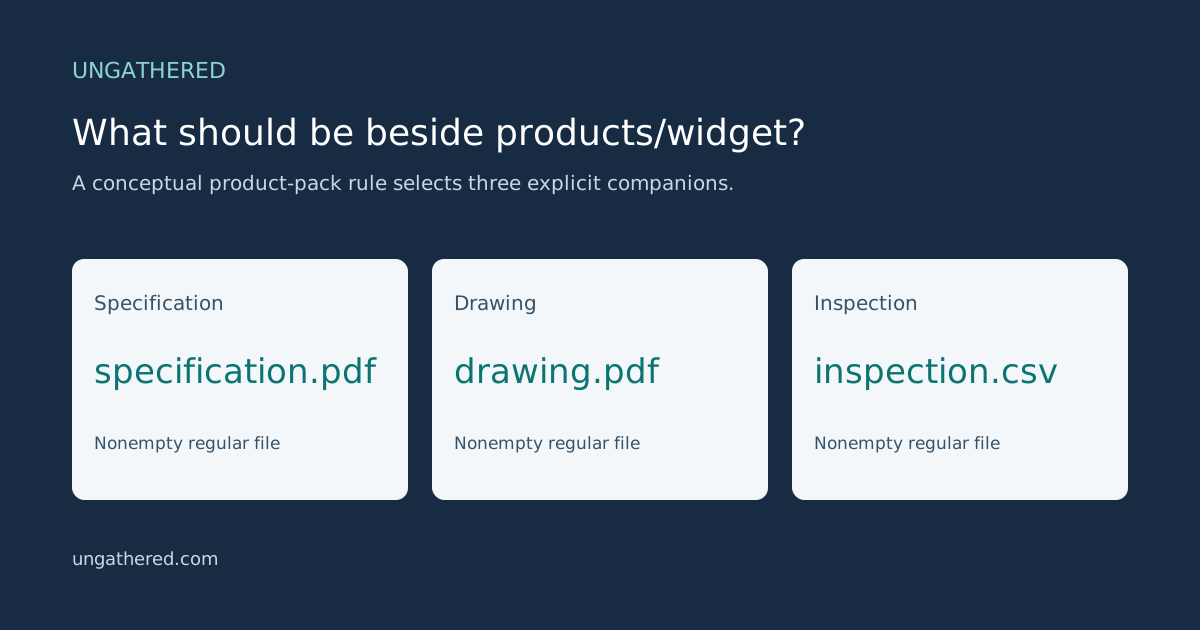
This is also where the limit becomes clear. If the entire widget directory is absent, a glob over existing directories cannot invent it. UnGathered can check a minimum item count, but it does not infer an expected product roster that was never declared. A complete result means the selected items satisfied the declared rules. It is useful evidence within that boundary, rather than a statement that nobody in the organization forgot anything else.
A companion check can establish several different things. A regular file may exist but be empty. An expected directory may have been replaced by a file. An article can have its matching image while lacking the credit text required by a regular expression. These checks remain deliberately literal. File size does not establish the quality of a specification, and a credit line does not establish rights to a photograph.
The practical advantage is consistency. A person can inspect one folder carefully and still apply a slightly different checklist to the next. A manifest applies the same named requirements to every selected item and leaves a report that another person can read. The manufacturing case and publishing case show both the results and their limits.